

Trust infrastructure often begins with a generous instinct: show more. If collectors can see more metadata, more history and more technical detail, perhaps they will trust a digital artwork more.
But public verification is not a data dump. A credible verification page should reveal the evidence needed to understand a work while keeping unrelated personal, contractual and operational information out of public view.
That distinction matters because digital-art provenance sits between several audiences. An artist needs control over how their identity and practice are presented. A gallery needs enough evidence to manage intake and handover. A collector needs a clear way to inspect origin and status. A technical operator may need diagnostic information that none of those audiences should see.
Putting every available field on one page does not create transparency. It creates exposure without purpose.
Provenance and privacy are not opposites
The C2PA Content Credentials standard is designed to carry cryptographically verifiable provenance information about digital media. Its current 2.4 specification treats privacy and personal control as design goals, not optional decoration. It encourages implementations to let creators and publishers control whether particular provenance data is included.
That is an important architectural idea. Verification should answer a defined question: what evidence supports the relationship between this asset, this artwork record and this publisher?
It does not follow that the public needs an artist’s home address, private email, internal account identifier, full legal paperwork, production notes or every step of an unpublished creative process. Those details may be legitimate in another context, but they are not automatically necessary for public trust.
The UK Information Commissioner’s Office describes data minimisation in similarly practical terms: personal data should be adequate for the stated purpose, relevant to it and limited to what is necessary. This is a data-protection principle, not a product-design slogan, and organisations should take appropriate advice for their own circumstances. Yet it also offers a useful discipline for provenance systems: define the purpose before deciding what to publish.
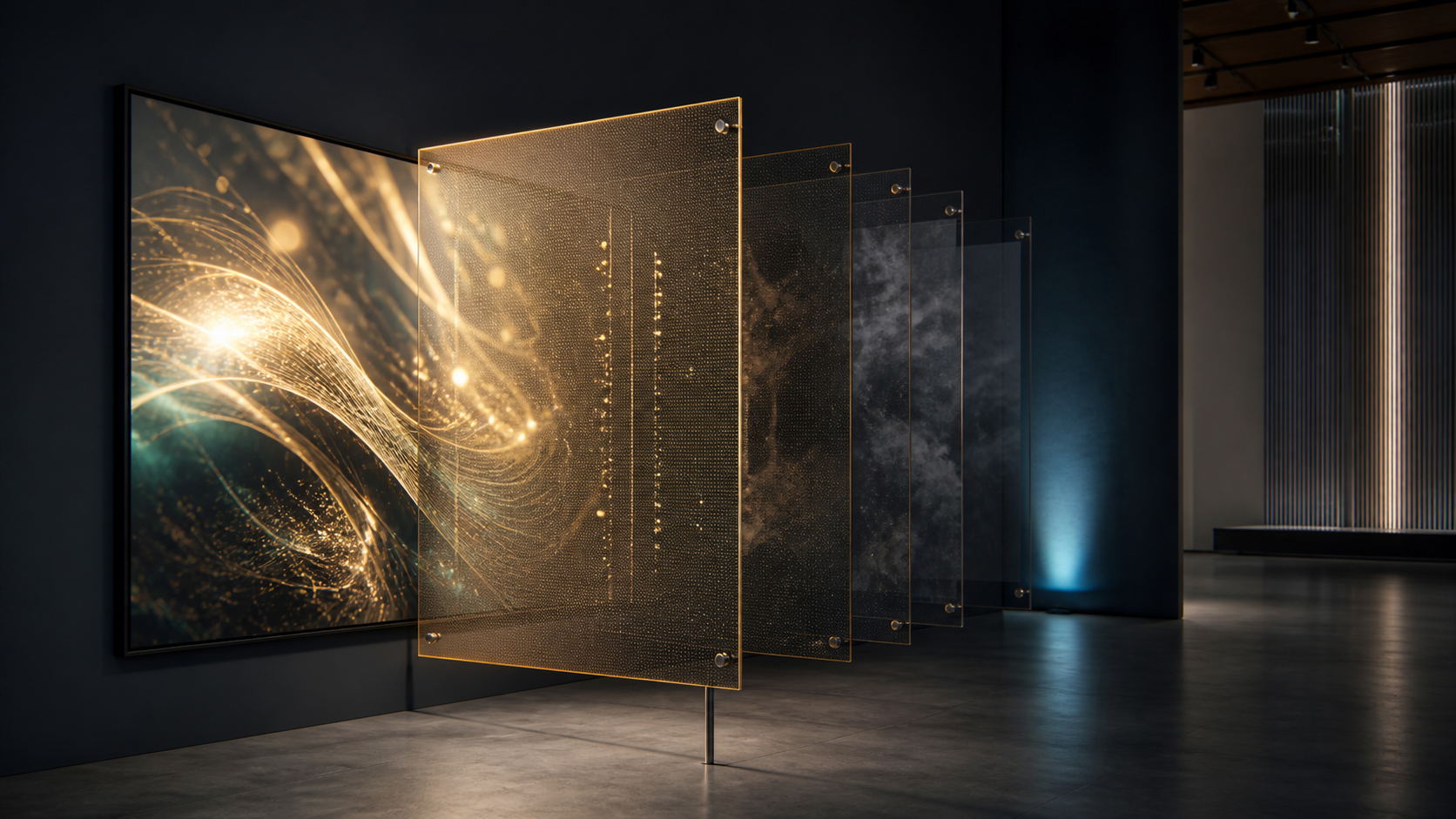
A verification page needs layers
A public page should begin with what a human being is actually trying to understand.
For a collector, that may include the work’s title, the artist or authorised publisher, the approved public image, a stable record identifier, relevant provenance status and a plain-English explanation of what has been checked.
For a gallery, it may also include the relationship between the displayed rendition and the protected record, an appropriate institutional contact route and enough history to support a professional handover.
For the artist, the same page should preserve control. Public identity can be meaningful without becoming indiscriminate disclosure. An artist may choose a professional name, studio identity or gallery representation path. Their private contact details, account-security information and contractual files belong in controlled systems, not in a collector-facing verification surface.
Behind the public page, an authorised operator may need richer evidence: validation reports, ingestion timestamps, technical logs, private contact data or documents supplied during onboarding. That information can be essential for operations while remaining inappropriate for public display.
The design task is therefore not simply to hide or reveal. It is to separate audiences and purposes.
Technical detail should be translated, not performed
Another form of overexposure is the unfiltered technical report. Cryptographic hashes, assertion labels, validation codes and repository responses can be useful to specialists, but a wall of machine output is not the same as a trustworthy explanation.
A strong public verification experience should distinguish at least three things:
- what the system has technically validated;
- what the artist or authorised publisher has stated;
- what remains incomplete, unavailable or outside the system’s scope.
That structure helps a viewer make a proportionate judgement. It also prevents a polished interface from turning a narrow technical result into a universal authenticity verdict.
C2PA does not decide artistic authorship, copyright ownership, licence scope, market value or whether a claim is morally persuasive. It provides a standardised way to preserve and assess signed provenance information. A responsible interface should make that boundary clearer, not blur it.
Public trust improves when the system can say less
Minimal disclosure is sometimes mistaken for weak evidence. In practice, restraint can make the evidence more legible.
Consider a gallery receiving a protected digital work. The gallery may need to confirm that the file is linked to the artist’s record and that the relevant provenance validates. The collector may need a stable page showing the work, the professional public identity and the current verification result. Neither party needs access to the artist’s private onboarding documents or the operator’s security logs.
If a dispute or reconciliation question arises, authorised staff can examine the controlled evidence and document the outcome through an appropriate process. The public record can then communicate the relevant conclusion and limits without publishing the underlying private material.
This separation also improves system quality. When a team has to decide why each field exists, it becomes easier to identify stale, duplicated or unjustifiably public data. Privacy-aware design is not only about removing information; it is about making every piece of information earn its place.
What this means for artists, galleries and investors
For artists, privacy-aware verification supports professional visibility without making participation feel like surveillance. The work and the authorised public identity can remain central.
For galleries and institutions, audience-specific access reduces the temptation to use email threads or shared folders as permanent evidence systems. Public, operational and confidential records can be handled according to their purpose.
For collectors, the result is calmer: a comprehensible record with clear evidence and honest limits, rather than a page crowded with irrelevant data.
For investors assessing art technology, this is a sign of operational maturity. A provenance product is more credible when it can explain what belongs in public, what belongs under controlled access and why. The defensible value is not the largest possible database. It is a system that produces useful trust without creating unnecessary exposure.
The Miharana approach
Miharana by Urticad publicly brings together invisible watermarking, signed C2PA provenance and public verification for digital art, followed by fiat-first commerce. Its product thesis is strongest when those components serve distinct purposes.
The watermark can provide a quiet linkage signal. A Content Credential can preserve signed provenance associated with an asset. A public verification page can translate the relevant evidence for artists, galleries and collectors.
The page should not become an excuse to publish everything the system knows.
The more durable principle is simple: collect and disclose information according to purpose, keep private evidence controlled, and make public claims precise enough to understand and verify.
Digital art needs transparency. It also needs boundaries. The best verification systems will be judged by how well they provide both.
Explore Miharana by Urticad: https://www.urticad.com/miharana
Sources
- C2PA, Content Credentials Technical Specification 2.4: https://spec.c2pa.org/specifications/specifications/2.4/specs/C2PA_Specification.html
- Information Commissioner’s Office, Principle (c): Data minimisation: https://ico.org.uk/for-organisations/uk-gdpr-guidance-and-resources/data-protection-principles/a-guide-to-the-data-protection-principles/data-minimisation/
- C2PA, Specifications and guidance index: https://spec.c2pa.org/specifications/
- Urticad, Miharana by Urticad: https://www.urticad.com/miharana