

“Made with AI” sounds like disclosure. In practice, it often conceals as much as it reveals.
The phrase can describe a work generated from a short prompt, a photograph selectively extended with a generative tool, a film whose frames were edited by several models, or an installation in which an artist trained a system, designed its rules and performs with its output. These processes are materially different. A single label compresses them into the same category.
That compression is unhelpful for artists, galleries and audiences. It encourages a false choice between saying nothing and publishing a technical diary. A better approach is proportionate process disclosure: record the tools, transformations and human decisions that are relevant to understanding a work, then present them in language a professional reader can actually use.
A binary label cannot carry a creative history
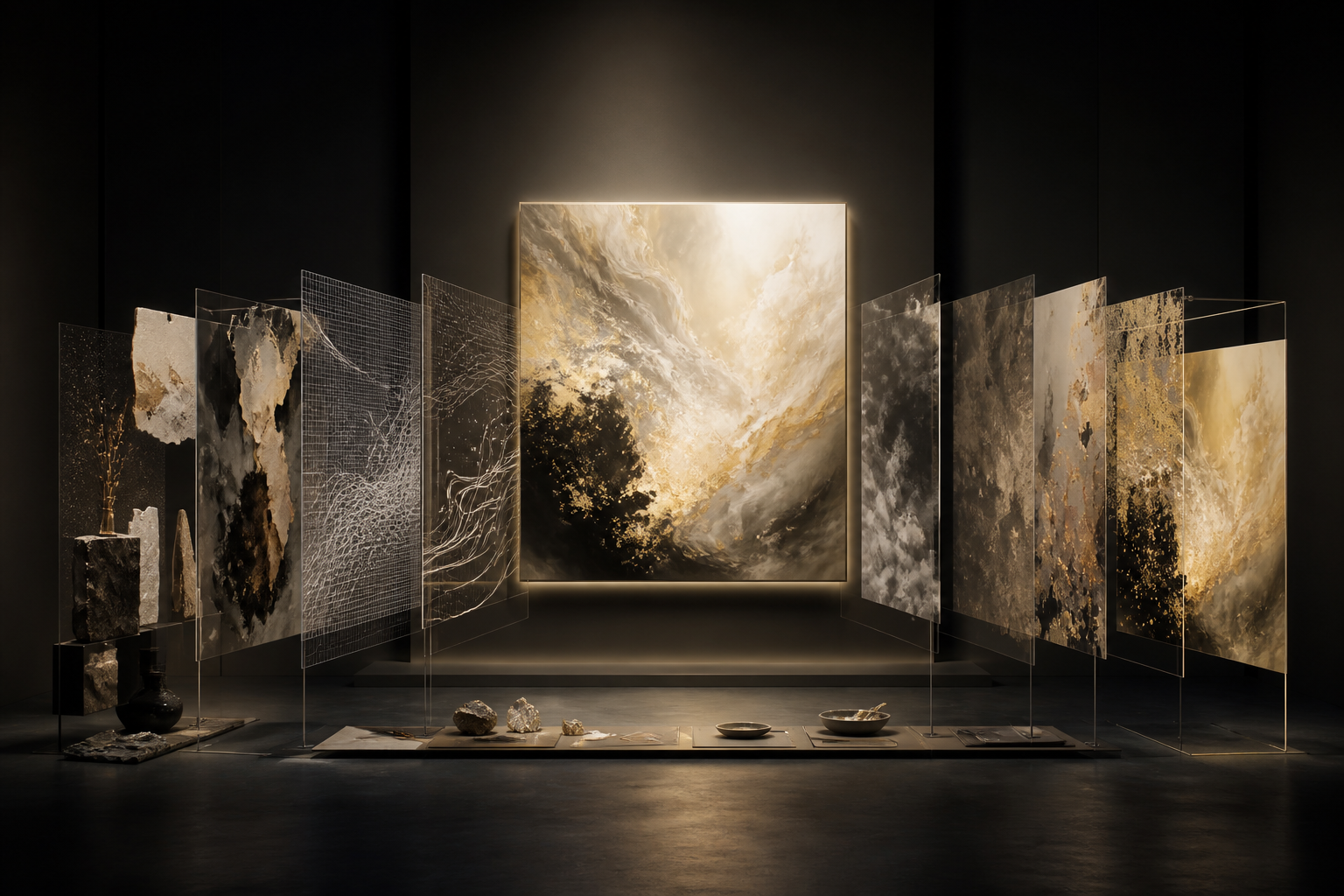
AI is rarely one event in a contemporary workflow. It may enter during research, image generation, compositing, sound design, restoration, translation, animation or final editing. Human judgement can appear before, between and after those steps: choosing material, setting constraints, rejecting outputs, combining fragments, directing performers and deciding what becomes the work.
If provenance records only the final file and an “AI-generated” flag, it loses the structure of that process. It cannot show whether the artist supplied original source material, whether a model transformed one part of a larger composition, or whether the system produced an intermediate asset that was substantially reworked.
The opposite extreme is not attractive either. Publishing every prompt, seed, draft and rejected output can overwhelm the viewer, disclose studio methods the artist wishes to keep private and create a quantity of data without a clear professional purpose.
Useful disclosure therefore begins with a question: what would another party need to understand the origin and development of this particular work?
Record actions and ingredients, not just categories
The C2PA specification offers a helpful vocabulary. Its provenance model can describe actions performed on an asset and ingredients used to create it. This allows a record to distinguish, for example, between an original capture, a source image imported into a composition, a generative transformation and a later edit.
That structure is more expressive than a badge. It can preserve a sequence without claiming that the sequence alone explains the art. It also allows different stages to be attributed to different tools or parties where the evidence supports that distinction.
For an artist, the relevant record might include the original media, the generative tool used for a particular transformation, a statement that the result was manually composited, and the version selected for publication. For a gallery, it might include the submitted master, the artist’s process note and the exhibition derivative. For an archive, it might include enough dependency and version information to understand what must be preserved.
The point is not maximal metadata. It is a legible account of meaningful change.
Human decisions should remain visible
Creative-AI research repeatedly shows why process matters. The University of Edinburgh’s work on creativity and AI examines how practitioners understand these systems in relation to authorship, labour, opportunity and risk. Those questions cannot be answered by treating every use of a model as the same creative act.
A responsible provenance record should make room for human decisions without converting them into exaggerated claims. It can identify that an artist selected source material, set a rule, curated outputs or performed substantial editing. It should not use those statements to award artistic merit or settle a legal question.
This distinction protects both credibility and creative freedom. The artist can explain the role of a system without presenting an exhaustive defence of the work. The gallery can describe what evidence it received without pretending to have witnessed every studio action. The audience can see more than a label while retaining the freedom to form its own judgement.
Disclosure needs levels of detail
One record can serve several readers if it separates summary from evidence.
The public layer should be concise: which stages involved generative or machine-learning tools, what kind of transformation occurred, and where human direction or editing was material. It should avoid unexplained model jargon and should not imply certainty that the evidence cannot support.
The professional layer can carry more detail for a gallery, institution or collector: named tools and versions where relevant, source and ingredient relationships, submission dates, asset versions and creator-supplied statements. Sensitive source files or private studio information do not need to become public merely because a provenance system records their existence.
The technical layer can preserve signed manifests, hashes and validation results. These make the account inspectable and tamper-evident, but they should sit behind a human-readable explanation rather than replace it.
This layered approach respects privacy while improving accountability. It also makes uncertainty visible. If a process statement was supplied by the creator rather than independently observed, the interface can say so. If a tool did not emit provenance data, the record can distinguish a documented statement from a machine-generated event.
What this means for galleries and institutions
Process disclosure can reduce friction at intake. Instead of asking an artist an open-ended question about “AI use”, a gallery can request a short structured account: relevant source material, generative stages, material human edits, final master and any dependencies required for presentation.
That account supports curatorial writing, preservation planning and future verification. It helps an institution avoid overclaiming, especially when a work combines code, models, performance and changing outputs. It also gives collectors and funders a clearer view of whether an art-technology platform has built a repeatable evidence workflow rather than added a fashionable label.
The same principle improves public communication. A visitor may not want a manifest, but they can understand a sentence such as: “The artist generated moving-image fragments from original drawings, selected and recomposed the outputs, then completed the film through manual editing and sound design.” That is informative without becoming a technical appendix.
Where Miharana fits
Urticad’s public material describes Miharana as a way for artists to protect, publish and verify digital work, combining invisible watermarking, signed C2PA provenance and public verification. These capabilities create a route from a circulating copy back to a structured evidence record.
For AI-assisted work, the product opportunity is not to decide whether a work is “really” human or “really” artificial. It is to preserve a credible account of relevant stages and present that account without flattening the artist’s process.
Invisible watermarking can help recover the route to the record when metadata is stripped. C2PA can bind actions, ingredients and assertions into a signed provenance structure. Public verification can translate that structure into language that artists, galleries and audiences can understand. Each layer has a distinct job.
The discipline is simple to state and demanding to implement: record what matters, attribute each statement, protect what should remain private and never let a badge substitute for explanation.
AI disclosure becomes useful when it stops being a verdict and starts becoming a legible history.
Sources
- C2PA Technical Specification
- C2PA: Content Credentials
- The Future of Creativity and AI: Views from the Scottish Creative Industries
- Miharana by Urticad
If you create, commission or preserve AI-assisted digital art, Urticad welcomes practical conversations about which parts of the process need to remain legible — and which should remain the artist’s own.